

What makes a science multiple-choice question useful: the correct answer, or the thinking students reveal while choosing it? Strong items do more than test vocabulary. They show whether learners can sequence a process, interpret evidence, predict an outcome, or connect parts of a system. That distinction matters because science MCQs can improve reliability and reduce teacher workload, yet they can also measure recognition instead of reasoning when the item is poorly designed. Research on science reasoning and multiple-choice assessment highlights that risk.
The eight topic collections below move from accessible elementary ideas to more demanding middle and high school applications: life cycles, matter, energy, Earth systems, ecosystems, human biology, cells and genetics, and chemistry. For every topic, use the same review frame: target concept, focused stem, misconception-based distractors, answer rationale, and next instructional step. Adjust the reading load and reasoning demand for the learners in front of you.
Teacher Planner can help you draft quizzes and companion materials, but generated questions still need teacher review for scientific accuracy, grade-level fit, accessibility, and standards alignment.
1. Life Cycle and Biological Processes
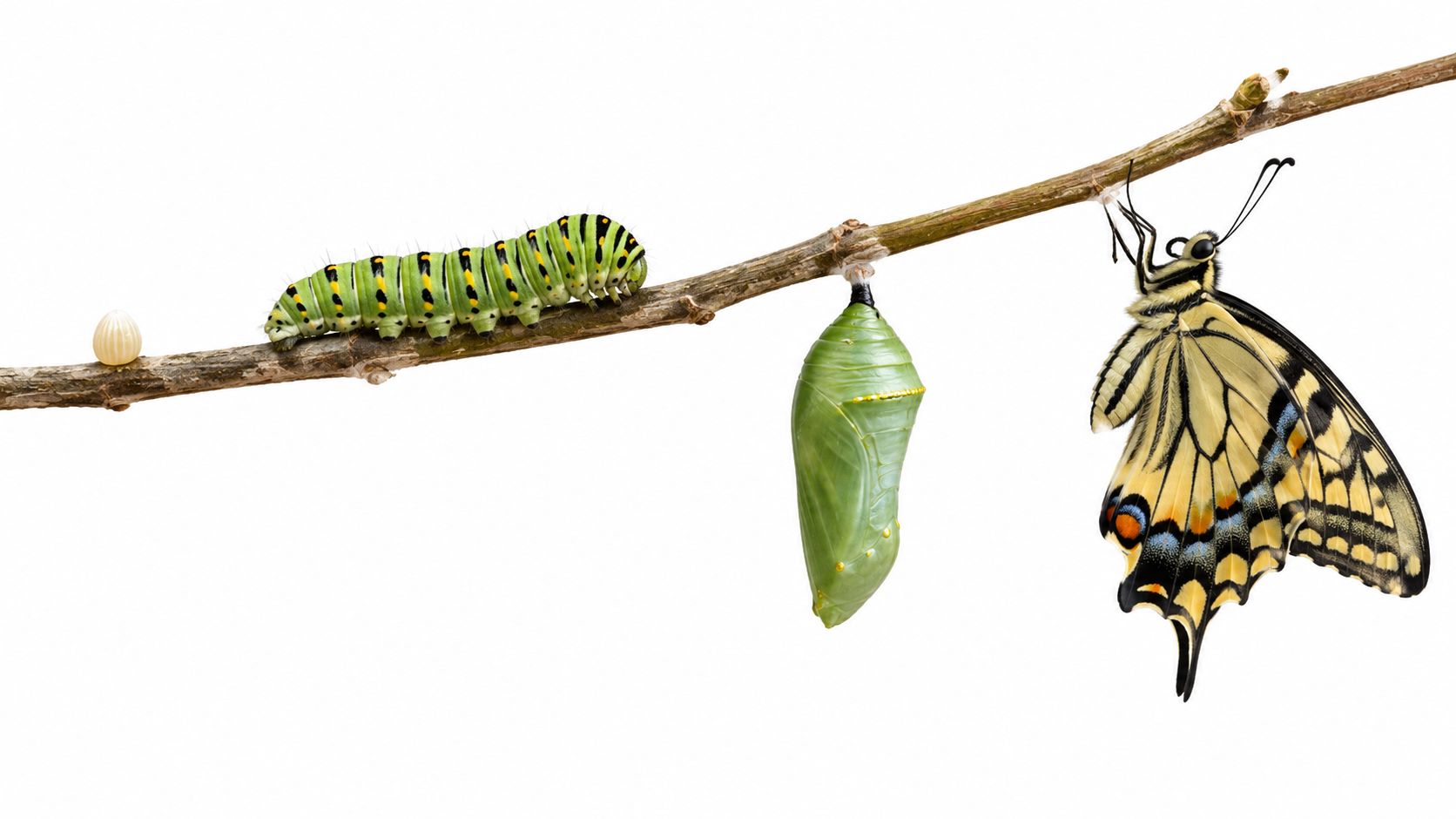
How can a life-cycle question show whether students understand change rather than recognize a picture? Start with the process students are expected to explain, then choose a stem that makes the thinking visible. An elementary item may show four butterfly images and ask which stage follows the larva. At middle school level, students might identify the biological changes associated with the pupal stage, but only if the wording matches the model taught in class.
Build progression into the stem
Progress from visible sequences to biological explanations:
- Elementary: Identify the next stage in a pictured butterfly or plant life cycle.
- Upper elementary: Select the missing image from an ordered sequence.
- Middle school: Predict how a change in conditions could affect reproduction, development, or survival.
- Advanced extension: Connect cellular processes with visible growth, while stating the background knowledge required.
Distractors should represent plausible misunderstandings. Reversing the stages, treating the pupa as a resting adult, or confusing growth with reproduction gives each wrong option a diagnostic purpose. The rationale can then identify the misconception and suggest a focused follow-up activity.
A plant sequence can develop from “Which part develops into a new plant?” to “Which sequence best describes seed germination, growth, flowering, and seed production?” For human development, assess broad biological patterns without suggesting that every person develops identically. Use respectful, age-appropriate language and adjust reading demands for the learners taking the quiz.
Draft each item from the learning objective, then pair it with a thematically aligned lesson plan for the unit. Teacher Planner's Multiple Choice Quiz Generator can provide a starting draft, while Text Rewriter can simplify sentence structure for multilingual learners or students who need lighter reading demands. Review every answer and distractor for accuracy, alignment, and accessibility before classroom use.
2. Matter, States, and Physical Properties
What evidence shows that a material has changed state? A wet sidewalk drying in sunlight gives students a familiar way to reason about evaporation. Rather than recalling a definition, they identify the process from observable conditions. Write the stem so it supplies enough evidence for one defensible answer without turning reading complexity into an accidental test.
Build the item around the learners' current model of matter. Younger students can classify materials by shape, texture, transparency, and whether they flow. Older students can connect state changes with particle behavior, provided the lesson has introduced that model. Steam offers a useful diagnostic case: students must distinguish water vapor from visible droplets in a cloud. An incorrect choice may reveal the belief that every visible substance is a gas.
Use a progression that moves from observation to explanation:
- Classification: Which object is a solid, liquid, or gas under the stated conditions?
- Prediction: What will happen to ice when heat is added?
- Comparison: Which material is more transparent, flexible, or malleable?
- Application: Which physical property suits a material for a specified use?
Options should share the same grammatical form and level of detail. If three choices name properties while one names a chemical reaction, test-taking strategy can reveal the answer. Similar answer lengths keep attention on the science.
A short demonstration can supply the evidence for the question. Students might observe melting ice, condensing water, or materials with different properties, record what they see, and then answer the MCQ. The rationale should connect the correct choice to that observation and explain why a tempting distractor reflects a different concept.
Organize questions across the unit instead of waiting for one end-of-topic test. Teacher Planner's organization views can help schedule question banks, worksheets, and standards review beside lessons. Everyday contexts such as cooking, weather, recycling, and manufacturing add value when they clarify the target property or state change. For different learners, shorten the reading load or provide a diagram while keeping the assessed objective unchanged.
3. Energy, Forces, and Motion
What causes an object to speed up, slow down, or change direction? Strong energy, forces, and motion questions make that cause-and-effect relationship visible. A playground swing can test where potential energy is greatest, while a cart scenario can ask how changing a force's size or direction affects motion. At high school level, a graph, diagram, or short calculation can require students to interpret evidence before selecting an answer.
Begin with the situation students can observe, then ask them to explain it. For example, an item might show a cart before and after a push, provide the direction of friction, and ask which motion will result. State whether forces are balanced, whether friction matters, and whether the object is already moving. These conditions prevent ambiguity and ensure that the answer depends on physics rather than guessing.
Build the item set in stages:
- Elementary: Identify kinetic energy in a moving object or potential energy in an object held above the ground.
- Middle school: Predict how a change in force affects an object's motion.
- High school: Interpret a position-time or velocity-time graph and connect its pattern to acceleration.
- Engineering application: Choose whether a lever, pulley, or inclined plane changes how force is applied.
Distractors should model specific reasoning errors. A choice may confuse speed with force, assume that motion continues only while a force acts, or reverse a vector's direction. The rationale should explain the correct relationship and identify the mistaken idea behind each tempting option. Asking students why a distractor seemed plausible turns answer review into a diagnostic discussion.
A short lab can provide the evidence. Students observe motion, record results, and then answer one recall, one prediction, and one interpretation question. Teacher Planner's Multiple Choice Quiz Generator can help produce grade-level drafts, while the Worksheet Generator can create graphing or calculation practice. Save effective stems as reusable resources, then check their conditions, distractors, and objective before using them with another class or unit.
4. Earth Systems and Weather
How can one question show what students understand about Earth's systems, rather than whether they remember a single term? Start with a process and require evidence. A water-cycle item might show a diagram and ask which process follows condensation. A stronger version could present weather observations and ask students to infer how pressure differences produce wind. The answer should depend on clues in the prompt.
Diagrams need the same care as the science. Label features consistently, make arrow direction unmistakable, and remove decoration that competes with the information. For a seasons item, distinguish Earth's axial tilt from the explanation that seasons result from changing distance from the Sun, if that contrast matches the objective.
Build difficulty by changing the reasoning students must use:
- Elementary: Sequence evaporation, condensation, precipitation, and collection from pictures.
- Middle school: Read a weather map or connect cloud formation with changing atmospheric conditions.
- Middle school and high school: Link a rock type to its formation process, or explain differences among Earth's internal layers.
- High school: Analyze interactions among the atmosphere, hydrosphere, geosphere, and biosphere in an environmental scenario.
A good distractor exposes a particular misunderstanding. One option might confuse evaporation with transpiration, another might treat weather and climate as the same, and a third might identify a rock by its appearance instead of its formation. Explain why the correct choice fits the evidence. Then identify the reasoning error behind each plausible distractor, so review becomes a diagnostic conversation.
Use a familiar storm, seasonal pattern, stream, or rock formation to give the item a concrete anchor. Teacher Planner's Unit Timeline can distribute Earth-system concepts across a sequence. Text Rewriter can adjust vocabulary when terms such as evaporation, transpiration, or atmospheric pressure need clearer wording. Follow the draft with a weather-data worksheet, then ask students to interpret the pattern independently in an MCQ.
5. Ecosystems, Food Webs, and Interdependence
What happens to a pond community when one population changes? A strong ecology item lets students follow that change through connected organisms instead of recalling isolated definitions. Present a small food web, identify a shift such as fewer insects or more fish, and ask students to predict the next effect. The reasoning becomes harder when the answer depends on several links or an indirect consequence.

Use developmental progression to match the objective. Elementary students can identify producers, consumers, and decomposers in a familiar pond or schoolyard. Middle school students can trace what may happen after a species is removed. Older students can compare habitat requirements, explain adaptations, or evaluate competing explanations for a population trend. A question should resemble a map of relationships: each arrow gives evidence, while the final choice shows whether students followed the route correctly.
Keep the diagram focused. Plants, insects, frogs, fish, birds, and decomposers may be enough to ask who receives energy directly from a producer or which population could grow after a predator declines. State what arrows represent, since some students read them as feeding direction rather than energy movement. Distractors can expose role confusion, single-cause reasoning, or the belief that a learned behavior is an inherited physical adaptation. In the rationale, explain why the correct option follows the web and name the reasoning error in each plausible alternative.
A local pond, woodland, coastal habitat, or schoolyard can anchor the assessment. Students can observe organisms, record available resources, build a small food web, and answer what might occur if one resource became scarce. Teacher Planner can place the observation, worksheet, and quiz in a useful sequence. If a field trip or weather disruption changes the schedule, Bump Forward can move the affected lesson while preserving the order of later lessons. Use response patterns to form a short reteaching group based on the misconception represented by each distractor.
6. Human Body Systems and Health
How can a human-body multiple-choice question show whether students understand a system, rather than recognize a label? Start with the learning objective, then select the structure, process, or relationship that provides evidence of that understanding. Elementary students might identify the organ that moves air into the body. Middle school students can trace blood flow or connect breathing with gas exchange. High school students can explain how several systems help maintain stable internal conditions.

Build the reasoning path gradually. A circulatory item might ask where blood travels after leaving the right side of the heart, if students have learned that pathway. A digestion item could ask which sequence correctly represents food movement, mechanical processing, and nutrient absorption. For younger learners, include labeled structures or a short word bank. For older learners, remove some support and ask them to connect processes across systems.
Diagrams should clarify the target, not turn the question into a visual scavenger hunt. If the objective is gas exchange, highlight the relevant structures and ask what occurs there. For nervous-system signaling, show a stimulus and response, then ask which pathway explains the movement. Distractors can reveal whether students confuse an organ's location with its function, reverse a sequence, or treat oxygen transport and cellular respiration as the same process.
Useful formats include:
- Sequence: Trace food, air, or blood through the correct structures.
- Function: Match an organ or tissue with its role.
- Interaction: Connect oxygen transport with respiration in body cells.
- Application: Predict changes during physical activity.
- Health literacy: Interpret a general health scenario without asking students to diagnose anyone.
Review health items for accuracy, cultural sensitivity, and age-appropriate language. Avoid alarming distractors and medically incorrect claims. Keep personal examples optional, and never require students to disclose private health information.
Teacher Planner's Lesson Plan Generator can support an introductory lesson on an individual system. The Quiz Generator can then provide a focused check, while the Text Rewriter can create a simpler reading version when needed. A labeled-diagram worksheet gives students practice with structure and function before they must select and justify an answer independently.
7. Cells, Genetics, and Heredity
How can a question reveal whether students understand a cell process, rather than just recognize a term? Start with the learning objective and build the item around the reasoning students should demonstrate. For younger learners, connect labeled cell structures with visible functions. Older students can work with inheritance patterns, Punnett squares, pedigrees, DNA, and protein production.
A diagram becomes useful when it focuses attention on the target. If the objective is organelle function, highlight the relevant structures and ask which one controls cell activities or releases usable energy. For genetics, provide parent genotypes and ask which offspring genotype is possible. A more advanced item might connect a DNA change with altered protein production, using only the molecular detail students have studied.
Give students the information needed to reason. Define allele symbols in a Punnett square, state whether the trait is dominant or recessive, and avoid suggesting that dominant means more common or stronger. Those misconceptions make effective distractors because they reveal how students are interpreting inheritance.
A varied question bank might include:
- Structure and function: Identify an organelle and its role.
- Procedure: Complete or interpret a Punnett square.
- Pattern analysis: Use a pedigree to identify possible inheritance patterns.
- Mechanism: Connect DNA sequence, protein synthesis, and an observable trait.
- Evidence-based conclusion: Select the claim supported by the information given.
The Multiple Choice Quiz Generator can draft separate vocabulary and problem-solving sets. Use the Worksheet Generator for Punnett-square practice before assessment, then prepare a simpler text version for students who need language support. Check every genetics item for scientific accuracy, especially examples involving human traits or medical conditions.
Write rationales that show the reasoning. For a Punnett-square item, explain how the parental alleles combine and why the other choices conflict with the stated inheritance pattern. That explanation helps teachers identify whether an error came from reading the symbols, applying the procedure, or misunderstanding heredity.
8. Chemical Reactions and Atomic Structure
What should students observe before deciding that a chemical reaction occurred? Build chemistry MCQs around evidence, then connect that evidence to symbols and particles. Younger learners can identify gas formation, a color change, or a temperature change as possible evidence of a reaction. With greater readiness, students can identify reactants and products, classify reaction types, interpret the periodic table, and apply conservation of mass to an equation.
Atomic-structure questions should match the course level. An introductory item may ask students to distinguish protons, neutrons, and electrons by location, charge, or role. A later item can use valence electrons to reason about bonding, provided the stem supplies the information students must apply. Treat the atomic model like a map: labels and relationships matter more than memorizing isolated terms.
Design distractors around predictable reasoning errors:
- Reaction confusion: Mix up synthesis, decomposition, and combustion.
- Equation errors: Change subscripts instead of coefficients when balancing.
- Evidence confusion: Classify a physical change as proof of a chemical reaction.
- Particle confusion: Swap the roles or charges of subatomic particles.
- Conservation errors: Assume atoms disappear when reactants become products.
A lab-based item can present an observation and ask for the particle-level explanation. For gas production, students might choose the statement that best connects the visible bubbles with new substances forming. Keep every option similar in structure and precision, so length does not reveal the answer.
Use editable worksheets for element symbols and balancing practice before the quiz. Follow a demonstration or lab with questions while observations remain fresh, and create an accessible vocabulary version for students who need language support. Write rationales that trace the reasoning, such as how coefficients preserve each type of atom and why an alternative changes the substance itself. These explanations help identify whether the difficulty involves observation, symbolic notation, or conservation.
Science MCQs, 8-Topic Comparison
| Topic | Implementation complexity | Resource requirements | Expected outcomes | Ideal use cases | Key advantages |
|---|---|---|---|---|---|
| Life Cycle and Biological Processes | Low–Moderate (simple sequences; diagrams add complexity) | Illustrations/diagrams, basic classroom props, optional AI image support | Mastery of sequential stages and basic cellular processes | K–8 life science units, visual assessments, formative checks | Visual-friendly; easy to grade; aligns to NGSS life standards |
| Matter, States, and Physical Properties | Low–Moderate (requires precise language) | Demonstration materials (water, heat source), temperature tools, worksheets | Classify states, predict phase changes, observe physical properties | K–8 demos and hands-on labs, unit introductions | Observable in class; adaptable by grade; strong lab connections |
| Energy, Forces, and Motion | Moderate–High (math, graphs, vector reasoning) | Motion equipment, ramps/weights, graphing tools, diagrams | Understand energy types, force relationships, motion analysis | Elementary to HS physics units, lab investigations, graph interpretation | Real-world relevance; fosters systems thinking and prediction |
| Earth Systems and Weather | Moderate (data interpretation; cyclical reasoning) | Maps, weather data, models, field observations | Explain cycles, weather patterns, Earth system interactions | K–12 Earth & space units, seasonal lessons, data analysis | Relatable to students; supports environmental literacy and maps/diagrams |
| Ecosystems, Food Webs, and Interdependence | Moderate (multiple interacting relationships) | Field tools, diagrams, local ecosystem examples, observation time | Analyze trophic levels, energy flow, species interdependence | Ecology units, outdoor learning, field studies | Highly engaging; supports sustainability themes; easily differentiated |
| Human Body Systems and Health | Moderate (sensitivity and detail vary by system) | Anatomical diagrams/models, privacy considerations, health resources | Describe system structure/function, homeostasis, health implications | Upper elementary to HS biology and health lessons | Direct personal relevance; strong cross-curricular links; visual aids effective |
| Cells, Genetics, and Heredity | Moderate–High (abstract concepts, Punnett squares) | Microscopes/models, genetics problem worksheets, visualizations | Identify organelles, predict inheritance patterns, interpret pedigrees | Middle to HS biology, labs on cells and heredity | Develops problem-solving; connects to real-world genetics and medicine |
| Chemical Reactions and Atomic Structure | High (abstract models, symbolic notation, math) | Lab chemicals and safety gear, periodic tables, reaction demos | Understand atomic structure, bonding, reaction types and conservation | Chemistry units, hands-on reaction labs, advanced science courses | Hands-on labs reinforce concepts; builds predictive and quantitative skills |
Turn Question Banks Into Better Instruction
Across all eight topics, the same design discipline produces better science assessment. Start with a precise learning target. Decide whether students must recall a term, apply a rule, interpret evidence, predict a change, or explain a system. Then write a stem that asks for one decision and supplies every condition needed to make that decision fairly.
Build distractors from likely misconceptions, not random wrong answers. A useful distractor tells you something about student thinking: a reversed sequence, an incorrect causal link, a confused system function, or a faulty interpretation of a graph. If every distractor is obviously wrong, the question may measure test-taking skill instead of science understanding.
Add a concise rationale for the correct answer and for the most important distractors. The rationale should support the next instructional move. If students choose an option that confuses evaporation with condensation, reteach the direction of the state change with a diagram or demonstration. If they misread a food-web arrow, return to the meaning of energy flow before adding more species.
A balanced question bank should vary cognitive demand without pretending that every item must be complex. Recall questions can establish essential vocabulary. Application questions show whether students can use a concept in a familiar situation. Interpretation questions require students to read a graph, diagram, table, or observation. Prediction questions ask them to reason about what could happen when a condition changes. For deeper reasoning tasks, combine MCQs with diagrams, short explanations, laboratory observations, or student-created models.
Research on science-process assessment documents a long-running tradition of using multiple-choice items to measure skills such as inquiry, integration, and process understanding, with named instruments appearing from 1968 through at least 1994 in a widely cited review available through the overview of multiple-choice assessment. That history supports using MCQs as part of science assessment, not treating them as a complete replacement for explanation or investigation.
Review every item before assigning it. Check the science, grade-level language, diagram clarity, accessibility, answer uniqueness, standards coverage, and relevance of the scenario. Item analysis should also guide revision. In a large introductory biology course, researchers examined more than 76,000 responses to 133 multiple-choice questions across quizzes and exams, finding that content demand and answer-choice structure affected difficulty and discrimination. The biology assessment study supports reviewing items individually instead of judging a whole quiz only by topic labels.
Don't assume that more answer choices automatically create a better question. A 2025 systematic review and network meta-analysis found that three-option MCQs could offer comparable validity to longer formats while reducing completion time and the risk of non-functional distractors, as reported in the open-access review of MCQ formats. The practical lesson is simple: prioritize plausible distractors, clear wording, and evidence of learning over unnecessary options.
Use a repeatable planning sequence. Map the topic and standards in Teacher Planner, draft the quiz, create a companion worksheet, schedule the assessment after the relevant instruction or lab, and review student responses before planning the next lesson. The question bank becomes more valuable when each response changes what you teach next.
Teacher Planner organizes lessons, units, schedules, and standards while providing editable drafts for science quizzes, worksheets, lesson plans, and adapted texts. Build your next science sequence by mapping the topic, preparing the assessment materials, and scheduling the follow-up lesson in Teacher Planner.