

Effective third grade writing instruction usually looks less like a stack of worksheets and more like a steady routine. That matters because third grade is the point where many students are expected to write in opinion, informative, and narrative modes, sustain writing for different purposes and audiences, and strengthen drafts with revision and editing support, as reflected in the Common Core grade 3 writing standards. In other words, third graders aren't just learning to put sentences on paper. They're learning how writing works.
Strong writing activities for third graders build fluency, confidence, structure, audience awareness, and revision habits together. A major evidence-based guide for elementary writing also recommends at least 30 minutes a day of writing and another 30 minutes being taught to write, which shows that writing grows best as a daily practice, not an occasional assignment, according to this Institute of Education Sciences-aligned writing guide.
That's why I like a progression. Start with low-pressure writing that gets pencils moving. Model decisions where everyone can see them. Add scaffolds for specific genres. Then gradually release more responsibility so students can write longer, clearer, more independent pieces.
The eight activities below follow that sequence. Each one includes when to use it, a short lesson pattern, differentiation options, common pitfalls, and a planning move that keeps prep manageable. If you use a digital planning system such as Teacher Planner, it can help you organize recurring lessons, generate editable worksheets, save prompt banks, align standards, and use Writing Feedback as one feedback support. It doesn't replace your assessment decisions or function as an LMS, but it can reduce repeated setup work.
1. Guided Journal Writing
Guided journals are one of the simplest ways to build writing stamina without making every entry feel high stakes. Third graders need repeated chances to turn ideas into sentences, and journals give them exactly that. A five-minute morning entry, an end-of-day reflection, or a science observation notebook all work.
Keep the routine predictable. Students write more easily when they know where the notebook is, when writing starts, and what kind of response is expected.
Best use in the classroom
Use guided journal writing when students are hesitant, slow to begin, or still building confidence. Prompts should feel open enough for voice, but structured enough to prevent blank-page paralysis.
A few reliable examples:
- Personal reflection: “My favorite part of recess is…”
- Emotion check-in: “Today I feel ___ because…”
- Observation writing: “I noticed ___ in our plant today.”
- Imaginative quick write: “If my backpack could talk, it would say…”
Practical rule: Don't over-correct journals. If every entry becomes an editing lesson, students start writing less.
A short lesson sequence
Model one brief response out loud. Write two or three sentences and say what you're doing: choosing one idea, adding one detail, then rereading for sense. After that, let students write independently for a short burst and share one line with a partner.
Differentiation is easy here:
- For emerging writers: Give a sentence starter and allow drawing before writing.
- For multilingual learners: Offer a word bank with key nouns, verbs, and feeling words.
- For stronger writers: Ask for one added detail, question, or connection.
The most common mistake is expecting polished convention-heavy writing every time. Journals are for fluency first. If you want to leave quick comments without turning entries into graded assignments, a tool like Teacher Planner's Writing Feedback can help you draft short, constructive responses that focus on one next step.
Planning becomes easier when you save prompts by month, unit, or genre. A seasonal bank, a science-linked bank, and an opinion bank are usually enough to keep journal writing fresh for a long time.
2. Story Dice and Visual Prompt Writing
Some students don't dislike writing. They dislike starting. Visual prompts solve that problem because the idea is already partly on the page.
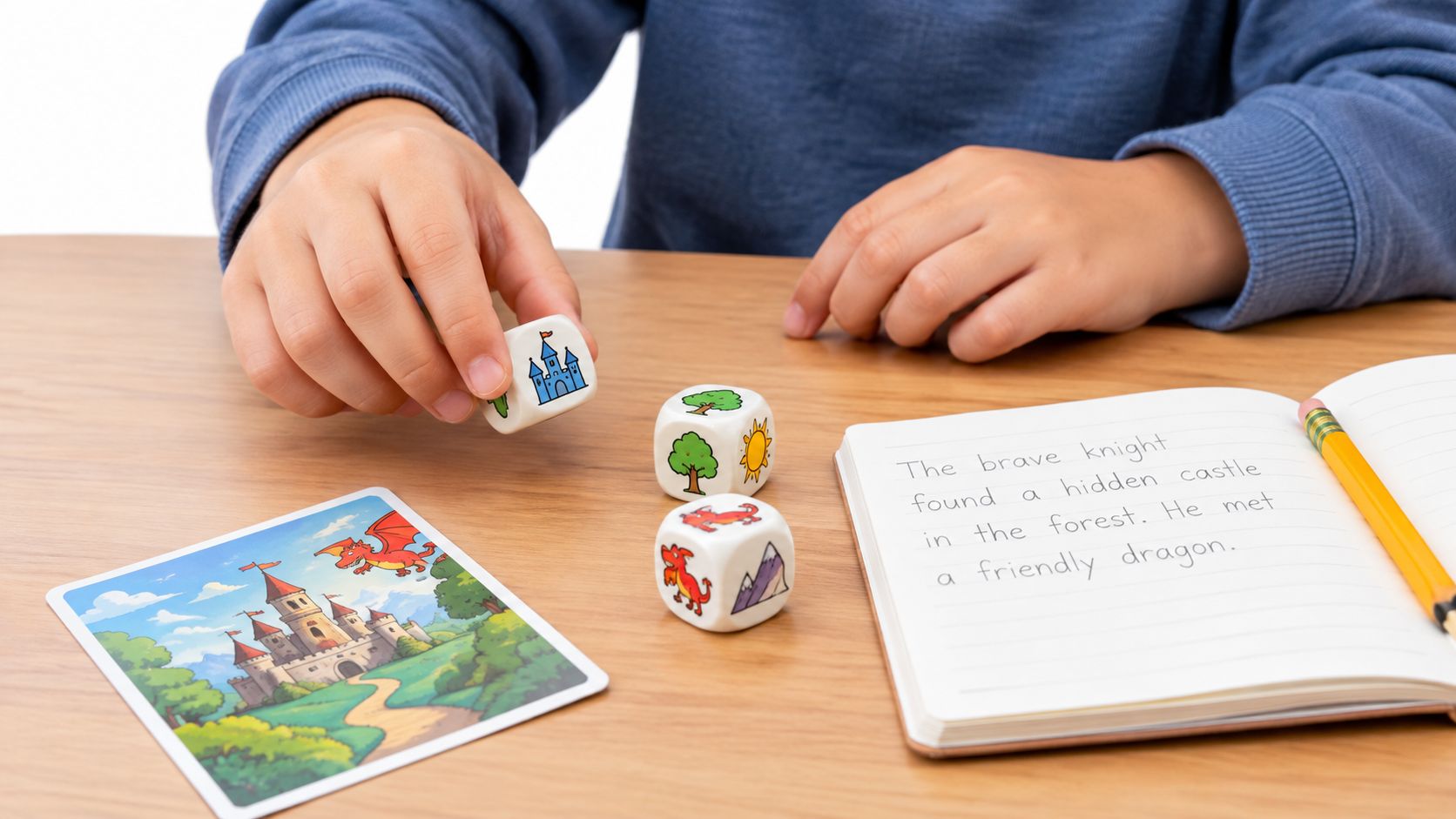
Story dice, photo cards, and image sequences work especially well when you want narrative practice without requiring every child to invent a topic from scratch. A die showing a castle, a bicycle, and a storm cloud can quickly become a story with a setting, a problem, and an ending.
How to keep the pictures from doing all the work
Model idea generation first. Roll or reveal the visual, then think aloud: “I see a castle, so I'm thinking of a place. The storm cloud could cause the problem. The bicycle might be how the character escapes.” That kind of visible planning helps students understand that good stories come from choices, not magic.
Then give students a simple structure:
- Beginning: Who is in the story and where are they?
- Middle: What problem happens?
- End: How is the problem solved?
Students who need more support can orally rehearse with a partner before writing. Students who are ready for more can add dialogue or a stronger closing sentence.
Efficient classroom moves
This activity works best when the planning page is short. A three-box organizer for beginning, middle, and end is usually enough. If the organizer gets too crowded, students spend all their energy filling boxes instead of writing sentences.
Watch for one common pitfall. Some children list what they see in the image instead of telling a story. When that happens, prompt with a question: “What changed?” or “What went wrong?” That small nudge usually shifts them from description to narrative.
You can also rotate visuals by purpose. Use photographs for descriptive writing, picture sequences for retelling, and story dice for original narratives. Over time, students start internalizing the structure and need fewer prompts.
3. Interactive Writing and Shared Writing
Interactive writing and shared writing are where third graders start acting like writers before they can do every part alone. This is the bridge between idea-heavy activities and independent drafting.
A useful way to picture the difference is this. In shared writing, you hold the pen and the class helps build the text. In interactive writing, students also step in to write parts they can manage, such as a known word, an ending, or a piece of punctuation. Both formats lower the load, so students can focus on how writing works.
That matters because many third graders still use most of their energy on spelling, handwriting, and getting started. If independent writing asks them to juggle everything at once, the quality often drops. Shared composition lets you slow the process down and make each decision visible.
What to teach during the writing, not just before it
This is the place for live craft instruction. Students hear you rehearse a sentence, choose between two verbs, reread for sense, and decide where a period belongs. They also see that revision is part of writing, not a sign that the first try failed.
Keep the text short and purposeful. A class thank-you note, a science observation, a classroom procedure, or a short opinion about a read-aloud all work well because the topic is already shared. Students are not spending their energy inventing content. They are studying how a writer turns ideas into clear sentences.
One sentence can carry a full mini-lesson. For example, if the class writes, “We liked the author visit,” you can pause and ask, “Can we make liked more specific?” Then revise together: “We appreciated how the author showed us her sketchbook.” That small move teaches precision better than a long explanation.
A classroom routine that stays efficient
Use a predictable four-step cycle:
- Say the sentence first. Have students rehearse it aloud.
- Write it in front of them. Invite students to supply words, sounds, or conventions they know.
- Reread immediately. Check for meaning and fluency.
- Revise one part. Add a detail, a transition, or a stronger word.
That routine works like training wheels. Students get support, but they still do real composing.
If you want to plan these modeled lessons quickly across a week or unit, use a lesson plan generator for writing mini-lessons and practice steps. It can help you map which days focus on sentence construction, genre features, or revision.
How this fits in the larger writing progression
Place this activity after low-pressure fluency work and before heavier prompt or genre writing. Early in the sequence, students may help compose one or two sentences. Later, the class can build a full paragraph, then use that shared piece as a model for partner or independent writing.
That sequencing saves teacher time too. One shared piece can do three jobs. It can introduce the genre, supply the mentor example, and create the checklist for independent work.
Simple differentiation that actually helps
For students who need more support, give two oral choices instead of an open question: “Should we start with We noticed or We observed?” This keeps them involved without putting them on the spot.
For students ready for more, ask them to justify a craft move: “Why does because make this opinion stronger?” or “Which closing sounds more complete?” Now they are not only contributing words. They are explaining the writing.
The common pitfall is doing all the thinking yourself. If students only copy the final sentence, they miss the lesson. If they help generate, test, and revise the sentence, they begin to internalize the process and can carry it into the next stage of writing.
4. Writing Prompt Journals and Sentence Starters
Sentence starters are often misunderstood. They're not a crutch when used well. They're a bridge.
A prompt like “I think recess should be longer because…” gives third graders a place to begin while still requiring them to supply the reason. That matters in grade 3 because students are expected to support opinions with reasons and organize ideas clearly, as noted earlier in the standards.
Strong frames that still leave room for thinking
Not every prompt needs a full paragraph frame. Some students benefit from a complete structure. Others only need the first line.
Examples that work well:
- Opinion: “I think ___ is the best classroom job because ___.”
- Narrative: “One day I discovered ___. First, ___. Then, ___. Finally, ___.”
- Informative: “Plants need ___. They also need ___. This helps them ___.”
- Descriptive: “The object was ___. It looked ___. It made me feel ___.”
The key is gradual release. Early in the year, provide fuller frames. Later, remove the middle supports and keep only the opening.
Planning prompts without reinventing them
A reusable prompt bank saves a lot of teacher time. Organize it by genre, season, or content area. Then you can match the prompt to the week's mini-lesson instead of searching for a brand-new idea every time.
Use sentence starters strategically:
- For access: Support students who freeze at the start.
- For structure: Reinforce transitions and paragraph shape.
- For differentiation: Offer one open prompt and one framed prompt on the same topic.
A common mistake is keeping the scaffold fixed for too long. If students always fill in blanks, they don't practice generating structure on their own. Pull back support in small steps.
If you want editable prompt sheets for opinion, narrative, or science-linked writing, Teacher Planner's worksheet generator is one way to create custom pages without building each one from scratch.
5. Poetry Writing
Poetry belongs in third grade because it teaches strong writing in a smaller space. Students can practice imagery, line breaks, repetition, and exact word choice without carrying the weight of a full paragraph or multi-page draft.
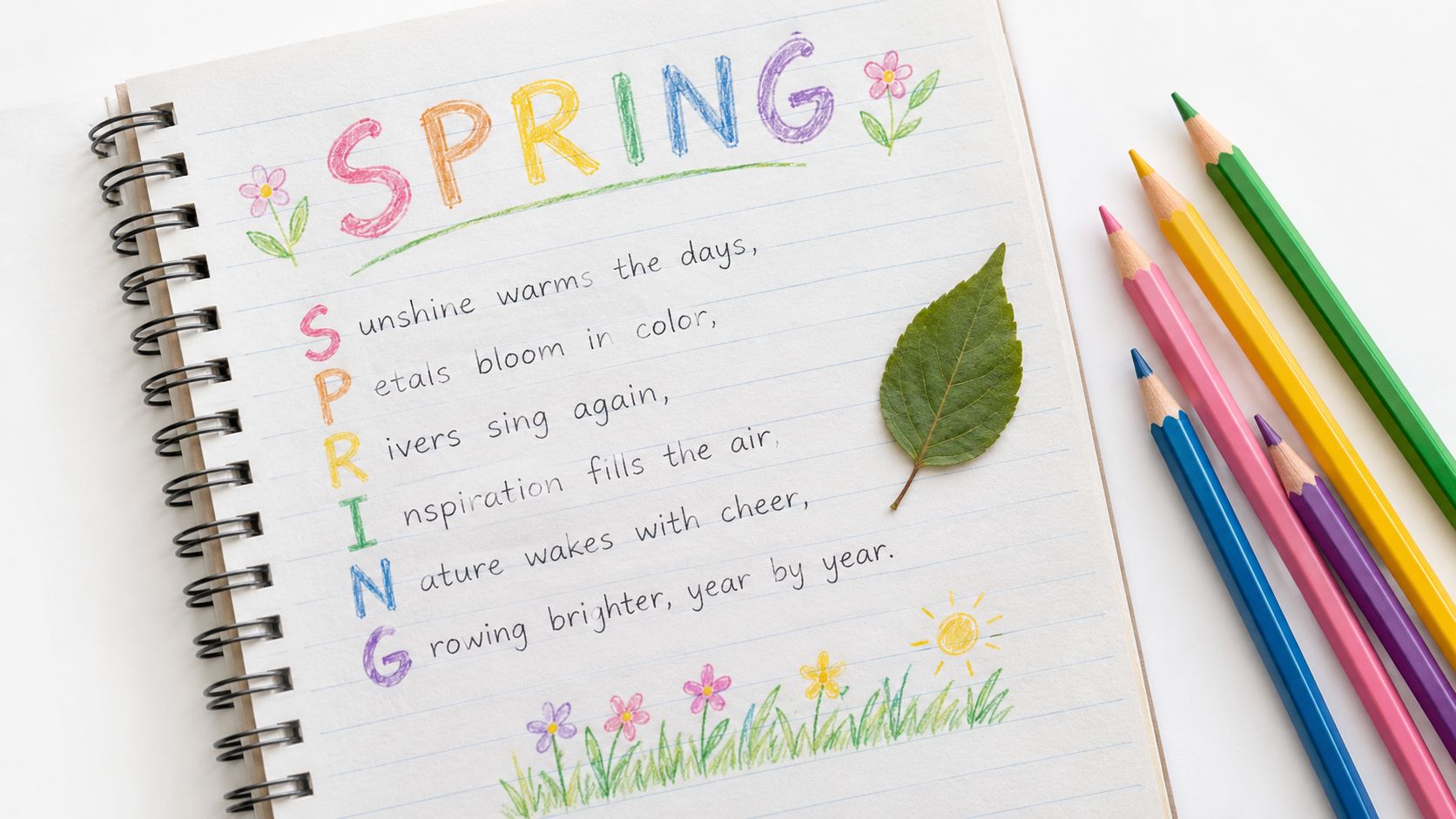
That matters in the middle of this progression. Earlier activities build fluency and shared confidence. Poetry is a smart next step because it keeps the pressure low while asking students to make sharper decisions. A child can write four strong lines and still do real author work.
Start with patterns, then widen the choices
Third graders usually do better with a clear structure first. The structure works like training wheels. It steadies the start so students can focus on language.
Formats that fit well include:
- Acrostic poems: Good for content vocabulary, seasonal topics, and review
- List poems: Good for repetition, rhythm, and voice
- Shape poems: Good for students who benefit from visual planning
- Simple haiku practice: Good for close observation and concise language
A color poem also works well because the frame is easy to hold in mind. For example: “Blue sounds like... Blue feels like... Blue looks like...” Students are not struggling to invent a format and an idea at the same time.
Model the noticing before assigning the writing
Poetry lessons go better when students study one short model and name what they notice. Read a poem aloud. Ask, “Which word gives you the clearest picture?” or “Why did the poet put that idea on a new line?” Then co-write a class poem before sending students off independently.
That sequence saves time later. Students need fewer corrections when the expectations are visible from the start.
A simple mini-lesson path can look like this:
- Read a short model poem aloud.
- Notice one craft move, such as repetition or sensory detail.
- Write a shared class example.
- Give students a narrow prompt or pattern.
- Confer for word choice, not length.
- End with a quick share and one revision move.
Why poetry helps hesitant writers
Some third graders freeze when they hear “write a whole page.” Poetry changes the size of the task. Instead of producing more, students work on choosing better.
That is an important shift. It teaches that writing quality is not only about length.
Poetry also creates an easy bridge from supported writing to more independent genre work. A student who has practiced selecting vivid nouns and verbs in a list poem is better prepared for personal narratives and informational pieces later. The craft transfers.
Classroom reminder: Treat poetry as regular writing instruction. It gives students repeated practice with imagery, sound, structure, and revision.
A common mistake is teaching the rule before the effect. If students spend the whole lesson counting syllables, they may miss the goal of helping a reader see, hear, or feel something. Keep the question simple: “Which words make this poem stronger?”
Publishing should stay simple and real. A poetry wall, a class anthology, a partner reading, or a short author's chair gives these brief pieces an audience without adding a large grading load.
6. Letter and Email Writing
Few writing activities for third graders build audience awareness as naturally as letters. Children write differently when they know a real person will read the piece.
A thank-you note to a guest speaker, a letter to the principal about playground ideas, or an email to a partner class gives purpose to conventions that might otherwise feel abstract. Greeting, body, closing, and signature all matter more when the message is going somewhere.
Authentic audience changes effort
When students know a reader is waiting, they usually clarify more, explain more, and reread more carefully. That doesn't mean every letter has to be mailed. Even a classroom mailbox or buddy-class exchange can make the writing feel real.
Good options include:
- Thank-you letters: After field trips, assemblies, or classroom visits
- Friendly letters: To family members or pen pals
- Persuasive letters: To request a classroom change or improvement
- Character letters: To or from a book character
Keep the format visible
Third graders still need a clear model. Put a sample letter under the document camera or on chart paper. Label the date, greeting, body, closing, and signature. Then co-write one before asking students to draft alone.
A useful mini-lesson sequence is short:
- Study one model letter.
- Name the parts together.
- Draft a class example.
- Let students plan their own message.
- Revise for clarity and tone.
The common pitfall is spending too much time on format and too little on message. A perfect heading doesn't matter if the body says almost nothing. Push students to add specific details: what they appreciated, what they noticed, what they're requesting, or why it matters.
Letter writing also pairs well with social studies and community-building work. It feels practical because it is practical. Students leave the lesson knowing writing can do something in the world.
7. Small Moment or Personal Narrative Writing
A lot of third graders say they have nothing to write about, then try to tell their entire life story in six lines. Small moment writing fixes that.
Instead of “My summer vacation,” ask for one focused slice: jumping into the lake, losing a flip-flop at the beach, or waiting nervously before a swim test. Narrowing the topic helps students elaborate.
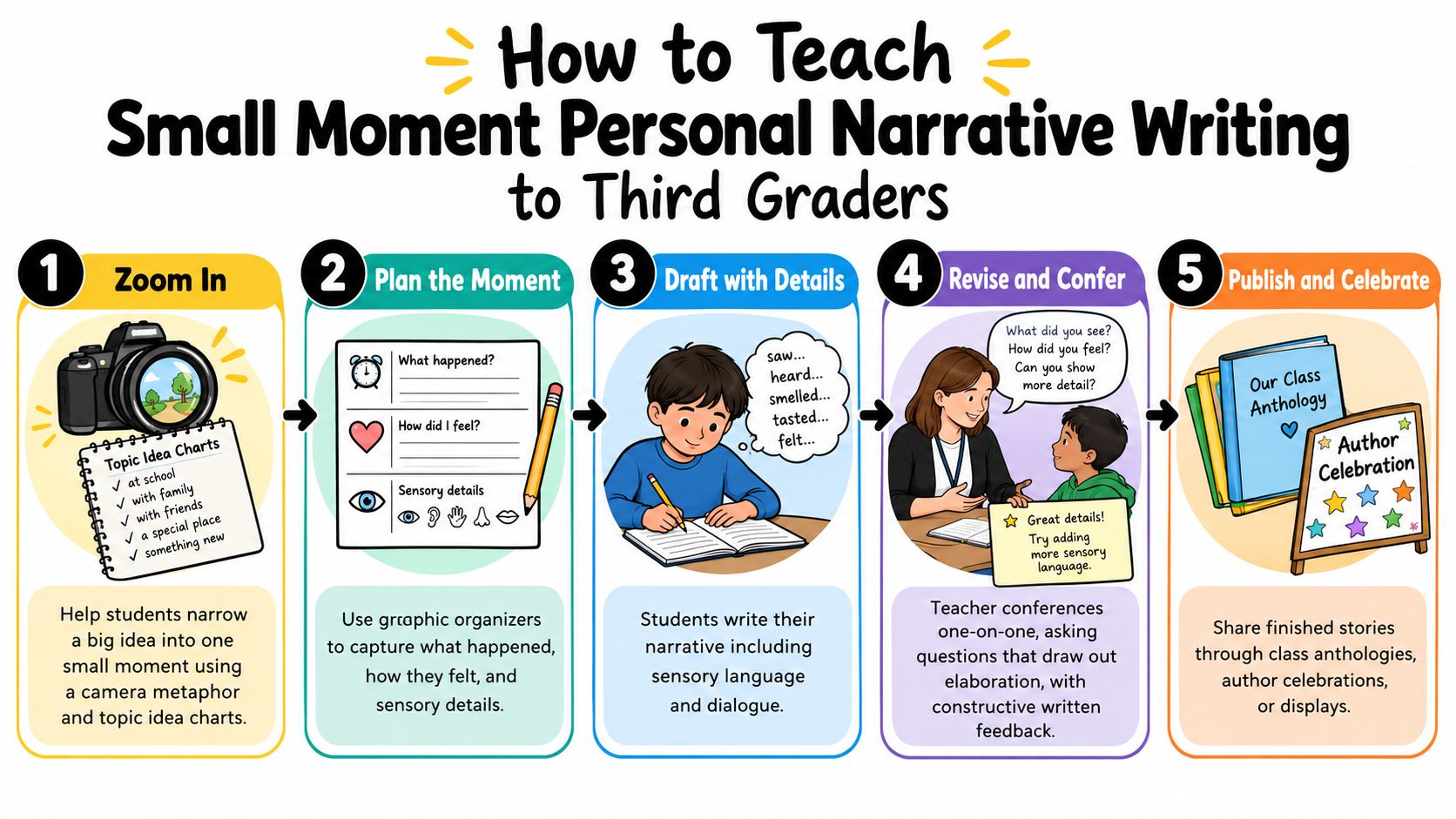
Zoom in so details can grow
Use the language of zooming in. Draw a camera icon if that helps. Show the difference between a big topic and a small moment.
Examples:
- Too broad: My birthday party
- Focused: When the candles tipped and everyone gasped
- Too broad: Playing soccer
- Focused: The moment I blocked the final kick
Students can plan with three questions: What happened? How did I feel? What did I see, hear, or say?
Helping students generate ideas first
Prewriting deserves real time. A 2025 study found that mind maps as a prewriting activity significantly improved third graders' writing performance across fluency, flexibility, originality, elaboration, and sensitivity, and the study also noted limited research in technology-enhanced third-grade creative writing, according to the Journal of Computer Assisted Learning article. That's a strong reminder not to rush straight from prompt to draft.
Try a quick idea routine:
- Sketch first: Draw the moment before writing it.
- Talk first: Tell the story to a partner in order.
- Map first: Put the event in the center and add feelings, dialogue, and details around it.
Students often need coaching to move beyond “It was fun” or “Then I went home.” Conference with questions that pull detail forward: “What did you hear?” “What did your face do?” “What were you thinking right then?”
Narrative writing starts to sound less generic and more lived in.
8. Informative and Explanatory Writing With How-To Books
Informative writing becomes much easier for third graders when the topic is procedural. If students can explain how to make a paper airplane, play hopscotch, care for a class pet, or organize a desk, they're already learning the core moves of explanatory writing.
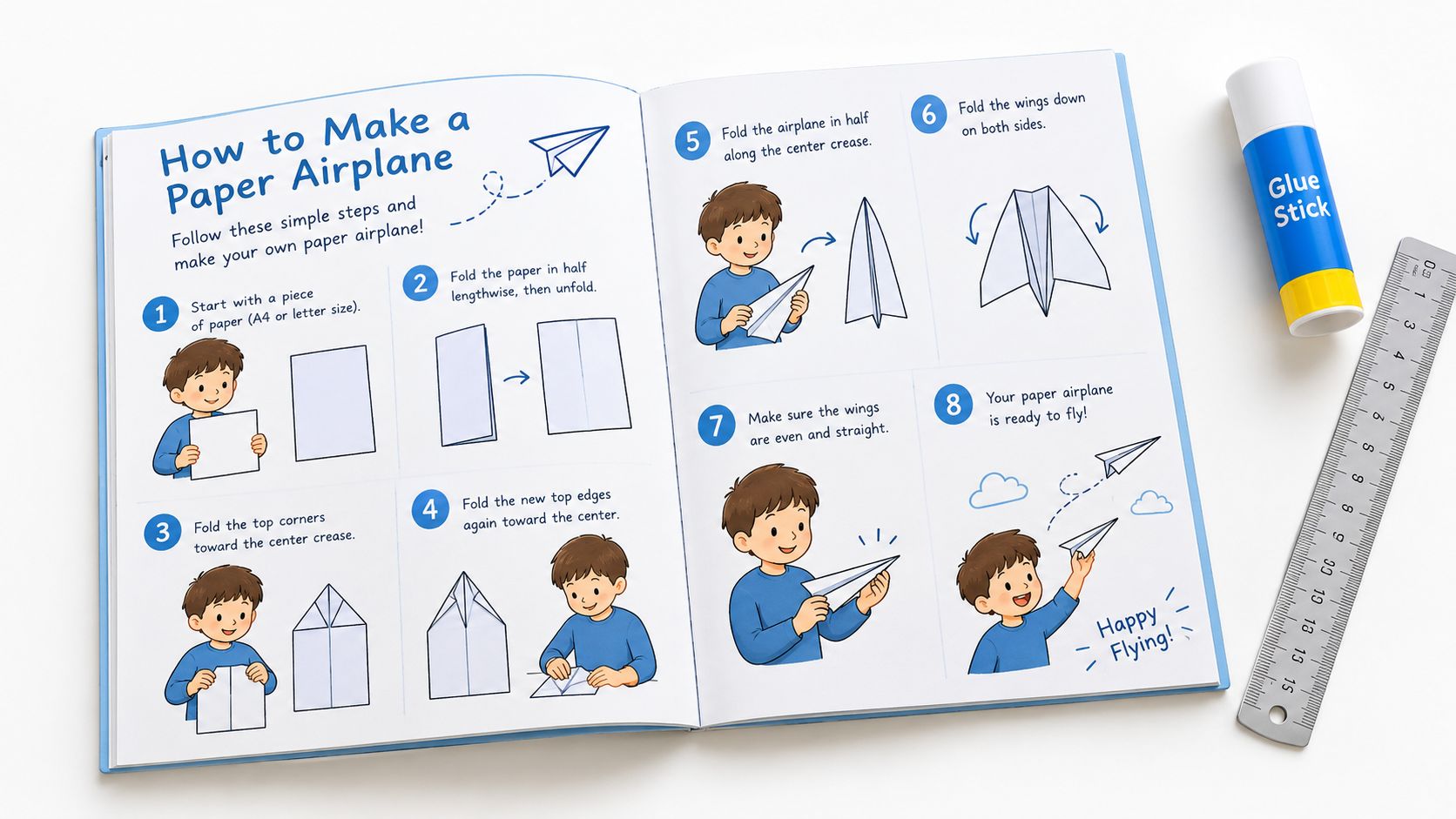
This work aligns well with third grade expectations because students need practice organizing ideas, using sequence, and writing for a reader who needs clear information.
Teach the reader, not just the steps
Students often leave out what seems obvious to them. That's why how-to writing is such a useful audience lesson. If a classmate can't follow the directions, the writing needs revision.
A randomized controlled trial with 133 third-grade students across three urban elementary schools found that an individualized performance-feedback writing intervention produced greater writing-fluency growth over 8 weeks than weekly writing practice alone or an instructional control, according to the What Works Clearinghouse practice guide. Clear feedback is part of what makes this kind of writing improve.
A practical structure
Sequence words do a lot of heavy lifting here. Keep an anchor chart visible with First, Next, Then, After that, and Finally. Model a familiar process aloud before students write.
A simple pattern works well:
- Demonstrate the process: Tie a shoe, build a snack, fold paper
- List the steps together: Keep the language simple
- Draft independently: One step per line or box
- Revise for clarity: “Could someone else do this from your directions?”
Sometimes the best revision question is, “What would confuse a second grader reading this?”
Strong extensions include adding labeled illustrations, pairing the writing with science content, or turning final pieces into class how-to books. These pieces feel useful because they are useful, and that gives explanatory writing a concrete purpose.
Third‑Grade Writing Activities: 8‑Point Comparison
| Writing Activity | Implementation Complexity | Resource Requirements | Expected Outcomes | Ideal Use Cases | Key Advantages |
|---|---|---|---|---|---|
| Guided Journal Writing | Low, routine setup and prompt planning | Minimal, notebooks/journals, prompt bank, brief teacher feedback time | Improved fluency, consistent writing habits, emerging voice | Morning routines, daily warm-ups, formative progress monitoring | Builds automaticity and confidence; low-pressure; easy to assess |
| Story Dice and Visual Prompt Writing | Low–Medium, prep image/dice sets and modeling | Story dice/cards/images, optional printable prompts, storage | Enhanced idea generation, narrative structure practice, descriptive language | Creative sessions, reluctant writers, mixed-ability groups | Reduces writer's block; highly engaging; easily differentiated |
| Interactive Writing / Shared Writing | Medium–High, requires skilled facilitation and time | Whiteboard/chart/document camera, planning time, whole-class management | Explicit modeling of process, revision skills, vocabulary & conventions | Whole-class instruction, introducing writing strategies, ELL support | Immediate feedback and modeling; builds ownership; scaffolded learning |
| Writing Prompt Journals & Sentence Starters | Low, create and rotate frames, gradually reduce support | Worksheets/templates, prompt bank, quick grading tools | Increased participation, structured practice, standards-aligned writing | Differentiation, scaffolded practice, quick assessments | Low-anxiety scaffold; easy to grade; aligns directly to standards |
| Poetry Writing (Acrostic, Haiku, Shape, List) | Medium, explicit instruction and format modeling | Mentor poems, anchor charts, templates, materials for displays | Stronger word choice, imagery, concise expression, confidence with formats | Language arts units, celebrations, short-form writing practice | Makes poetry accessible; builds vocabulary; highly shareable |
| Letter & Email Writing | Medium, coordinate audiences and model conventions | Templates, address collection or email tools, planning for authentic recipients | Audience awareness, practical conventions, persuasive/functional writing | Authentic projects (pen pals, thank-you notes), community connections | High student motivation; real-world purpose; meaningful feedback |
| Small Moment / Personal Narrative Writing | Medium, modeling "zoom in" and conferencing | Mentor texts, graphic organizers, teacher conference time | Deeper detail, narrative voice, sensory description, dialogue | Narrative units, portfolio pieces, conference-driven instruction | Encourages depth and voice; manageable scope; easy to confer about |
| Informative/Explanatory Writing & How-To Books | Medium, teach organization and sequencing explicitly | Research materials, graphic organizers, illustration supplies | Clear organization, sequence language, technical vocabulary, cross-curricular ties | Science/social studies integration, process explanations, class publishing | Teaches clarity and organization; authentic purpose; curriculum-aligned |
Turn Eight Ideas Into a Repeatable Writing System
The most useful writing activities for third graders aren't the ones you collect in a giant folder and rarely revisit. They're the ones you can teach in a simple sequence, repeat with small adjustments, and connect to what students need next.
If fluency is the problem, start with journals. If students don't know what strong writing sounds like, use shared writing. If they freeze at the first sentence, add sentence starters. If they can't generate ideas, bring in visuals or story dice. If their word choice is flat, teach poetry. If they need elaboration, move into small moments. If they need audience, assign letters. If organization is the issue, teach how-to writing.
That progression works because it moves from lower-pressure tasks toward more independent genre writing. It also matches what third graders are being asked to do in school. A major 2025 UK report found that only 33.5% of children and young people said they enjoyed writing in school, and that writing enjoyment was at its lowest level since 2010, according to the National Literacy Trust report on writing in school in 2025. That doesn't mean students can't become writers. It means the structure of writing instruction matters.
A dependable classroom cycle keeps things manageable:
- Model: Show the craft move visibly.
- Practice together: Rehearse with support.
- Draft independently: Keep the task focused.
- Revise one thing: Add one clear improvement target.
- Share: Give the piece a reader.
Don't give every student the exact same level of support. One child may need a sentence frame. Another may need a topic choice. Another may be ready for a blank page and a revision goal. Varying the support is often more effective than varying the standard.
Save what works. Keep your prompt banks, anchor charts, sample organizers, and mini-lessons. Then review student work and let that evidence decide the next teaching point. If half the class lists events without transitions, teach sequencing. If many students write vague endings, teach closure. If details are thin, return to oral rehearsal or mind mapping.
That's the takeaway. A small, well-sequenced rotation beats a pile of disconnected activities. When your lessons build from fluency to structure to independence, students don't just complete writing tasks. They start acting like writers. If you want one place to keep those recurring lessons, prompt banks, and editable materials organized, Teacher Planner is one option that fits that planning workflow without replacing your grading or classroom management systems.
If you want to turn these ideas into a working routine, Teacher Planner gives you a browser-based planbook plus tools for drafting lesson plans, worksheets, and writing feedback. It's useful for organizing repeating third grade writing lessons, saving prompt banks, and adjusting your sequence when the week changes.