

What makes a teenage writing topic worth assigning: the fact that it sounds interesting, or the writing work it asks students to perform? The strongest prompts give students a clear purpose, audience, and manageable scope. They also help teachers decide whether the class needs to practise voice, evidence, structure, interpretation, revision, or collaboration.
Teenagers already write for many reasons beyond school. A major Pew Research Center study of teen writing habits found that 93% of teens wrote for personal reasons or fun outside school, while their writing included creative work, journals, notes, letters, music, lyrics, and digital forms. That makes personal expression a useful starting point, but it shouldn't limit the curriculum.
The ten teenage writing topics below follow three broad pathways, personal, argumentative, and creative, then expand into reflective, literary, digital, informative, and collaborative work. Each topic is organized around a learning purpose, with attention to audience, scaffolding, risks, and classroom workflow. A planning tool such as Teacher Planner can help you sequence brainstorming, drafting, feedback, and revision without forcing every genre into the same lesson pattern.
1. Personal Narrative and Memoir Writing
What turns a personal experience into a strong piece of writing? A focused narrative gives one meaningful moment a clear shape. Students might write about a difficult conversation, a change in friendship, a first attempt at something unfamiliar, or a moment when their understanding shifted. The assignment asks them to choose telling details, establish a point of view, arrange events, and show why the moment matters.
The audience determines how much explanation the piece needs. A classroom reader may know the shared context, while a school publication or an imagined reader facing a similar transition will need more background. A private memoir can remain exploratory. A digital storytelling project needs enough context for viewers who do not know the writer or situation.
Make the personal manageable
“Write about your life” can sound like a demand for painful disclosure. Offer safer entry points: a place, object, routine, decision, relationship, or ordinary event that gained meaning over time. State the privacy options before drafting. Students may fictionalize names, select a less sensitive experience, or submit a private alternative.
Use a mentor text to locate effective openings, sensory details, reflection, and transitions. Students can then build a scene map before drafting. This map works like a route through a short story, keeping the writing focused without deciding every sentence in advance.
- Moment: What specific event or short period will the narrative cover?
- Change: What did the writer understand, decide, or notice by the end?
- Audience: What context will an outside reader need?
- Boundary: Which details can remain private?
Practical rule: Students should control the distance between their life and the assignment. A strong personal narrative requires reflection, not forced disclosure.
Plan the classroom sequence in separate stages: brainstorming, scene mapping, drafting, peer review, and revision. A Unit Timeline in Teacher Planner can place those stages across different lessons. Its Writing Feedback tool can support individualized comments, while the Day view can protect time for more than one draft. Keep early feedback focused on structure, specificity, and reflection. Address sentence-level errors after the larger meaning and sequence are working.
2. Persuasive and Argumentative Essay Writing
A strong argument begins with a decision that has more than one reasonable answer. Teenagers might examine a proposed school policy, public transport change, community-space design, or the responsibilities of social media platforms. Each topic gives students a reason to research and address readers who may disagree. Keep the question narrow enough to guide evidence. “Should our school change its uniform policy, and what evidence supports the change?” gives writers a clearer task than “School uniforms are good.”
Audience shapes the argument like a set of writing instructions. A principal may need practical costs and likely effects. A local official may expect community evidence. A school newspaper reader may respond to clear explanation and fair treatment of opposing views. Ask students to name their reader before drafting, then adjust tone, evidence, examples, and counterargument for that person.
Begin with short readings that present competing positions. Students can mark the claim, reasons, evidence, assumptions, and unanswered questions. This work helps them distinguish a position from a complete argument. A claim is the destination. Reasons and evidence provide the route, while a counterargument shows that the writer has considered alternative routes.
Use a planning sequence rather than a fixed paragraph formula:
- Question: Frame one decision that reasonable people could answer differently.
- Evidence: Select sources that support or complicate the claim.
- Counterargument: Represent an opposing view accurately before responding.
- Revision: Check that every paragraph advances the central position.
Teacher Planner's lesson plan outline example can help arrange source evaluation, outlining, peer review, and revision. Its Week view can reserve time for each stage, while the Writing Feedback tool can flag unsupported claims or weak evidence integration. Students should decide how to repair the reasoning, since feedback should guide judgment rather than replace it.
Classroom rule: Write for a real reader, then make each choice serve that reader.
Grammar correction alone will not teach this genre. A meta-analysis of writing instruction for adolescent students reported stronger average effects for strategy instruction, summarization, peer assistance, and product goals than for isolated grammar instruction. Plan lessons around evidence use, clear goals, revision, and the reasoning that connects each claim to its support.
3. Creative Fiction and Short Story Writing
A fictional choice can give teenagers room to test ideas safely. They might invent a character from a different background, place a conflict in the future, retell a familiar situation from an unexpected viewpoint, or blend historical research with fantasy. Each option asks readers to follow character, setting, conflict, sequence, and consequence, so creativity still has a clear learning purpose.
Offer entry points that match different audiences and interests. A student could write flash fiction, a scene from a young adult novel, fan fiction, a narrative podcast script, or an original story for a class anthology. A page story addresses a silent reader, while a podcast script must guide listeners through sound and speech. Wattpad and Archive of Our Own show how participatory writing communities work, but any classroom publication needs clear expectations for copyright, privacy, and content.

Give imagination a structure
An open prompt can leave a reluctant writer facing a blank page. A constraint works like a frame around a picture: it limits the space while helping the important details stand out. Ask students to write about a character choosing between loyalty and honesty, or set a scene in a familiar place where one important rule has changed. The boundary supplies direction without dictating voice.
Build the draft through brief experiments. Students can write a desire, fear, contradiction, and decision for the Character; describe Setting through what the character notices; and create a Conflict that forces a choice. They can then develop one scene, replacing broad summary with specific action and detail. These steps scaffold invention before students manage a complete plot.
A Lesson Plan Generator can arrange mini-lessons on character, setting, conflict, and point of view. During workshops, ask peers to describe what they understood, expected, or felt as readers instead of merely praising or rejecting the genre. Teacher Planner's Writing Feedback tool can highlight effective description and places where motivation or sensory detail needs development.
Assess the decisions students make: coherence, development, control of craft, and Revision. Stories may differ widely in subject and form, while the criteria remain visible and consistent. Creativity becomes teachable when students can explain how each choice shapes the reader's experience.
4. Poetry and Verse Writing
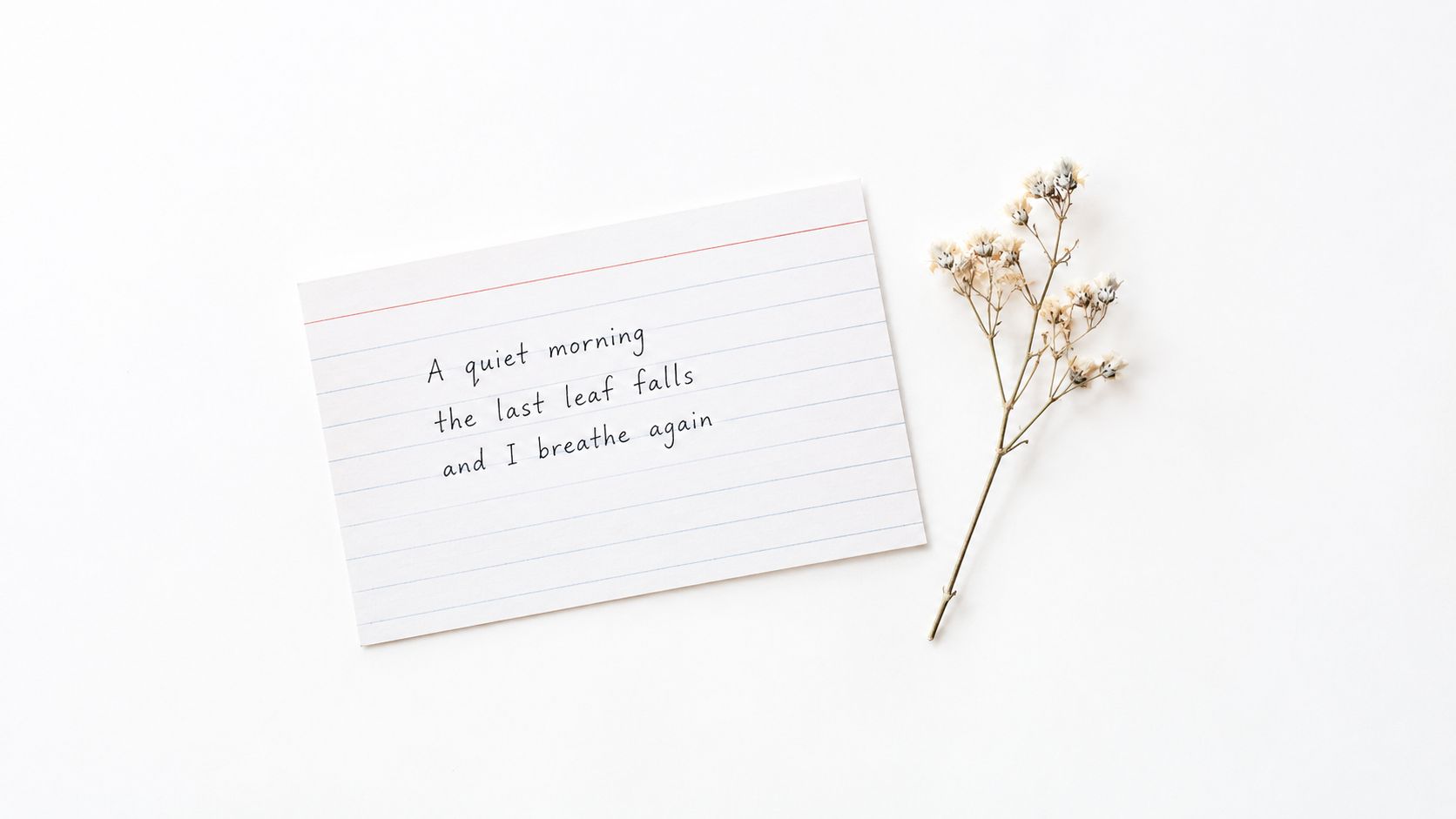
What can a short poem help students notice, question, or express? Poetry gives them a compact form for exploring emotion, image, sound, memory, identity, and public concerns. Free verse, haiku, sonnets, spoken word, and slam poetry each set different boundaries. Present the form as a lens that brings selected details into focus, then guide students through manageable choices rather than assigning “write a poem” as one intimidating task.
Begin by identifying the intended audience. A page poem speaks through line breaks, visual spacing, and silent rereading. A classroom performance also depends on breath, pacing, repetition, volume, and emphasis. Students can write for either audience, or create one draft and adapt it for both. This comparison makes craft visible without suggesting that every student must perform.
Use a concrete starting point: a sound, object, street, meal, or gesture. Students describe it without naming the emotion they want readers to feel. They then test how image, metaphor, rhythm, and line breaks create that feeling. This guide to figurative language for middle school can support an age-appropriate mini-lesson, with examples adjusted to the class's experience.
A workshop can run as a sequence of brief decisions. During Noticing, students collect sensory details from an ordinary moment. In Shaping, they try the same idea as free verse and within a constrained form. Reading aloud reveals awkward repetition, uneven rhythm, or unintended emphasis. During Revising, students replace general words with precise images where that change strengthens meaning.
Poetry doesn't require students to disclose their deepest feelings. They can write through an object, invented speaker, observed scene, or imagined voice.
Protect choice and privacy throughout the process. A Unit Timeline can schedule reading, drafting, optional performance practice, and revision. The Day view can reserve time for oral interpretation while offering another sharing method to students who need it. Feedback should identify effective word choices and ask focused questions about image, sound, or structure. Assess language control and revision decisions, not emotional intensity.
5. Expository and Informative Writing
A strong informative piece works like a guided tour. The writer chooses a destination, marks the route, and gives readers the context needed to follow along. Students might explain a scientific process, document how to use a tool, describe a local issue, or write an article for readers who know less about the subject. The work depends on selecting, ordering, and explaining information accurately.
Begin with the reader, not the topic. A science explanation for younger students needs different vocabulary and background information from a research report for specialists. Ask students to write a one-sentence audience profile before searching for sources. Then have them turn a broad subject into a question narrow enough to answer clearly.
Build the explanation from evidence
Students may copy notes when research has no visible purpose. Give them an organizer with spaces for the source, main idea, useful detail, paraphrase, quotation when needed, and their own explanation. The final column reminds them that research supplies building blocks, while the writer decides how those blocks fit together.
Use this classroom workflow:
- Choose a focused question.
- Find sources that address different parts of it.
- Group notes by idea, process stage, cause, or comparison.
- Draft explanations in the student's own language.
- Check accuracy, source use, organization, and reader comprehension.
A narrow question also reduces a common risk: a report that lists facts without explaining their relationship. Ask students to add headings, transitions, or a brief example wherever a reader might lose the thread. Feedback can focus on whether evidence is integrated accurately and whether each paragraph advances the explanation.
Teacher Planner's Worksheet Generator can produce adaptable note-taking and citation templates. A Unit Timeline can separate topic selection, source collection, outlining, drafting, and publication, giving students a clear sequence rather than one large report deadline.
The Writing Across the Curriculum Clearinghouse summary of adolescent writing research describes writing readiness as a significant concern in secondary education, including preparation for college-level writing and workplace expectations. Informative assignments can address that concern by teaching research, organization, and explanation habits that students can transfer to new subjects.
6. Opinion Pieces and Editorial Writing
What turns a strong opinion into a useful public contribution? The writer must connect a clear position with reasons, evidence, and the concerns of a particular audience. Opinion writing therefore sits between personal voice and formal argument. Students might create an op-ed, letter to the editor, blog post, petition statement, or student newspaper column about a school rule, current event, community concern, or digital habit.
Begin with mentor texts, then read them like maps. Students can mark the writer's position, intended audience, shared values, supporting evidence, and treatment of opposing views. This shows how an opinion piece is built without asking students to copy a writer's personality.
The assignment becomes teachable when the rhetorical situation is narrow. “What do you think about social media?” leaves too many paths open. “Write to the student newspaper about one change that would improve phone use during lunch” gives students a destination, audience, and possible action. The prompt should also state what the reader might believe or do after reading.
During planning, students can answer five questions in a paragraph or conference:
Opinion: What should the audience believe or do?
Reason: Why should readers accept this position?
Evidence: Which observation, source, example, or experience supports it?
Response: What might a reasonable critic say?
Appeal: Which values or concerns matter to this audience?
The sequence can unfold across a Week view. Students study mentor texts, discuss the issue, gather evidence, draft, and exchange responses. Peer reviewers should check whether the counterargument receives a fair answer or is only dismissed. Writing Feedback can identify unsupported assertions while recognizing reasoning that connects evidence to the audience's concerns.
Controversial subjects can pull attention away from the writing goal. Set discussion norms, offer topic alternatives, and separate criticism of an idea from criticism of a person. Students need meaningful choices, but they should not have to disclose personal beliefs, family circumstances, identity, or political affiliation. A fictional position or school-based issue can provide the same rhetorical practice with greater privacy.
7. Reflective and Metacognitive Writing
Reflection helps teenagers examine how they learn, respond to difficulty, make decisions, and change their approach. Suitable formats include reading journals, portfolio reflections, goal-setting letters, learning logs, and post-assessment analyses. The strongest tasks move beyond recounting events. Students identify what happened, explain what they noticed, and choose a practical next step.
A reflection works like a mirror and a map: it shows the learner's process, then points toward a better route. Use it after a major draft, at the end of a project, or when a problem requires a new strategy. Offer a short menu of prompts so students have meaningful choice without facing a blank page.
Ask students to build one response around four moves:
- Observation: What happened during the task?
- Interpretation: Why might it have happened?
- Decision: Which choice helped or hindered progress?
- Action: What will you try in the next task?
A brief example can focus the audience and purpose: “After peer review, explain which comment changed your draft, why you accepted or rejected it, and what you will test next time.” The task becomes evidence-based reflection rather than a general account of feelings.
Teacher Planner's Day view can support regular journal routines. A Unit Timeline can place reflection after research, peer review, or final publication. The Worksheet Generator can create versions of one prompt with different levels of support. Writing Feedback should ask questions that extend thinking, rather than treating a personal reflection as a mechanics exercise.
Set privacy expectations before students write. Explain which responses remain private, which the teacher reads, and which may be shared voluntarily. Gratitude and mindfulness prompts should not measure positivity, while failure analysis should not require distressing disclosure. The learning goal is strategic awareness, not forced vulnerability.
8. Literary Analysis and Response Writing
A literary response gives students a claim to test, not just a plot to retell. They might examine a character's change, trace a symbol, study how a narrator controls the reader's knowledge, or compare how two texts develop a shared theme. Response journals and annotations provide lower-stakes practice, while an analytical essay asks students to sustain one interpretation with carefully chosen passages.
The intended reader usually knows the text but may question the writer's interpretation. Students therefore need brief context, accurate quotations or paraphrases, and explanation of how each detail supports the claim. Plot summary can orient the reader, but analysis must show why the detail matters.
Start with a narrow reading task. Ask students to mark each moment when a character avoids direct speech, then examine what the pattern suggests about power or fear. An annotation should capture a precise observation and a possible meaning. Underlining alone does not show the reasoning a later response will require.
A useful progression can run through four questions: Notice a repeated image, choice, contrast, or change. Connect it to character, theme, structure, or voice. Test the idea against another passage that supports or complicates it. Claim an interpretation that the evidence can sustain. Students who need more support can receive a passage pair or sentence stems. More advanced writers can test two competing readings.
Classroom timing shapes the quality of the response. Align the Unit Timeline with the reading schedule, and use the Week view for annotation, discussion, outlining, drafting, and revision. Waiting until the final chapter can leave students with too much text and too little time to develop an idea. Short discussions before drafting let students hear different interpretations and identify evidence for a counter-reading.
A meta-analysis of peer feedback in adolescent writing synthesized 24 independent quasi-experimental studies, 70 effect sizes, and 1,975 middle- and high-school participants across 13 countries. It reported an overall writing improvement of ES=0.56, including gains in writing quality and higher-order and lower-order elements. For literary analysis, peer review works best with defined roles: check the claim, evidence, explanation, and counter-reading.
9. Digital and Multimodal Writing
What changes when a message moves from a page to a screen, recording, or interactive story? The words still need a clear purpose, yet meaning also depends on sound, images, links, pacing, layout, and visual hierarchy. A blog post, podcast, video script, educational social media sequence, or school website article gives students a different audience and a different set of writing decisions.
Start with the platform's conditions. A podcast script should sound natural when read aloud, with transitions that listeners can follow without seeing the page. A blog needs headings and a readable progression. An educational video needs one focused premise and a visual plan. A short social media post still requires accurate claims, enough context, and responsible sourcing. The format acts like a room: students must arrange the message so its audience can find and understand what matters.
Keep the rhetorical work visible before production begins. Ask students to submit a written pitch, an audience profile, a script or storyboard, source notes, and a revision reflection. For an explainer about misinformation, the written plan should show how the student defines terms, handles uncertainty, and leads viewers through evidence. These documents give teachers something to assess before technical choices distract from the writing.
A practical sequence can run through five checkpoints: Analyze how a selected platform addresses its audience. Plan the message, audience, format, and accessibility needs. Draft the script, captions, visual plan, and links. Test the draft with a peer who reports what was clear and where attention dropped. Revise the language and supporting media together. Students who need scaffolding can use a model, a storyboard template, or sentence starters. More advanced writers can adapt one message for two platforms and explain the changes.
Teacher Planner can place research, scripting, peer feedback, and production across a Unit Timeline. The Worksheet Generator can create audience-analysis prompts, while Writing Feedback can target clarity, engagement, organization, and appropriateness.
Privacy and consent set firm boundaries. Offer private presentations, audio-only submissions, or fictional brands instead of requiring public publication, personal accounts, faces, or identifying details.
10. Collaborative and Social Writing Projects
A shared writing project turns authorship into a visible set of decisions. Students must agree on purpose, divide research, combine voices, resolve differences, and revise one document for readers beyond themselves. Suitable formats include a class anthology, co-authored zine, school website, group research article, writing circle, or letter exchange.
Begin with the audience and learning purpose. Another class may need clear explanations, families may value personal perspectives, and school leaders may expect concise recommendations. A community partner can give the project a meaningful context, but public release is not required. A carefully edited class collection can provide an authentic audience while protecting privacy.
Treat the document like a shared stage: each student needs a defined part, and the group needs one agreed performance. Assign a coordinator, source manager, drafter, editor, and audience tester, then rotate responsibilities where possible. Every student should also submit individual notes and a reflection, so participation is visible even when the final product has one collective voice.
A workable classroom sequence is:
- Prepare individually: Students research or draft a contribution before the group meeting.
- Set the brief: The group agrees on purpose, audience, tone, structure, and decision rules.
- Assemble the draft: Students combine material and mark questions or conflicts instead of changing one another's work without notice.
- Review as readers: Another group checks coherence, missing context, and uneven evidence.
- Explain the work: Each student identifies a contribution and describes one revision decision.
Use Teacher Planner to place preparation, group meetings, and review across a Unit Timeline. The Lesson Plan Generator can create peer-review protocols and decision rules, while the Week view can reserve class time for collaboration. Feedback on the final draft should assess coordination, shared voice, evidence, and individual learning.
Accessibility requires more than assigning students to mixed groups. Offer roles that draw on different strengths, provide shared templates, allow private planning before discussion, and accept varied ways to contribute. Private presentations, fictional organizations, or unpublished collections can reduce pressure. A student's grade should reflect both the group product and the learning they can demonstrate independently.
Teen Writing Topics: 10-Point Comparison
| Genre | Implementation complexity | Resource requirements | Expected outcomes | Ideal use cases | Key advantages |
|---|---|---|---|---|---|
| Personal Narrative and Memoir Writing | Low–Medium; scaffold for vulnerability | Minimal: journals, mentor texts, privacy guidelines | Strong personal voice, reflection, writing confidence | SEL integration, college essay prep, introductory units | High engagement, accessible, builds identity and revision practice |
| Persuasive and Argumentative Essay Writing | Medium–High; requires explicit structure and rhetorical instruction | Research sources, lessons on evidence and counterclaims, rubrics | Critical thinking, argument construction, source evaluation | Debates, civic topics, standardized-test prep | Develops reasoning, information literacy, civic skills |
| Creative Fiction and Short Story Writing | Medium; teach story elements and pacing | Prompts, mentor texts, time for drafting and revision | Narrative craft, character development, imaginative risk-taking | Creative units, contests, free-writing workshops | Fosters creativity, flexible format, high student ownership |
| Poetry and Verse Writing | Low–Medium; form-specific instruction useful | Models of forms, time for performance/reading aloud | Concise language, imagery, sound awareness | Quick confidence-builders, performance, thematic units | Accessible entry points, rapid success, strengthens diction |
| Expository and Informative Writing | Medium–High; organized instruction in structure and research | Reliable sources, citation guides, graphic organizers | Clear explanations, research skills, disciplinary literacy | Lab reports, how-to essays, cross-curricular projects | Transferable academic skills, clear assessment rubrics |
| Opinion Pieces and Editorial Writing | Low–Medium; balance voice with supporting evidence | Current-event sources, publication outlets, mentor op-eds | Persuasive voice, audience awareness, civic engagement | Student newspapers, letters to officials, blogs | Authentic audience, motivates socially conscious learners |
| Reflective and Metacognitive Writing | Low; routine prompts and classroom trust required | Journals/portfolios, confidentiality protocols, prompts | Self-awareness, growth mindset, learning strategies | Portfolios, learning journals, formative checkpoints | Supports SEL, low-stakes insight into learning processes |
| Literary Analysis and Response Writing | High; requires close-reading and thesis development | Complex texts, modeling, strong rubrics, annotation tools | Textual analysis, evidence integration, academic writing | AP/IB courses, literature units, analytical essays | Deep reading skills, college readiness, transferable analysis |
| Digital and Multimodal Writing (Blogs, Scripts, Digital Stories) | Medium–High; multimodal design and platform conventions | Technology, multimedia tools, digital citizenship instruction | Digital literacy, audience design, multimedia composition | Podcasts, blogs, video projects, interactive stories | Real-world relevance, multimodal communication skills |
| Collaborative and Social Writing Projects | Medium–High; needs protocols for coordination and assessment | Collaboration platforms, role structures, peer-review systems | Teamwork, negotiation, co-authorship processes | Group research, class anthologies, shared publications | Mirrors workplace writing, peer support, multiple perspectives |
Turn Topics Into a Teachable Writing Sequence
A list of teenage writing topics becomes useful when each option points to a specific learning goal. Choose personal narrative and memoir when students need to develop voice, sequence, detail, and reflection. Choose argumentative essays when the priority is reasoning, evidence, counterargument, and revision. Fiction and poetry support imagination, craft, imagery, sound, and deliberate language choices.
Use informative writing to teach research, organization, accuracy, and explanation. Literary analysis strengthens close reading and evidence-based interpretation. Opinion pieces give students a public voice while requiring them to distinguish a supported position from an unsupported assertion. Reflective writing helps students examine process and plan their next response to difficulty.
Digital and collaborative tasks add different demands. Digital writing teaches platform awareness, audience, accessibility, and the relationship between text and media. Collaborative projects develop communication, negotiation, shared editing, and collective problem-solving. A strong sequence doesn't treat these genres as interchangeable. It asks what students need to practise, then selects the form that makes that practice necessary.
Before assigning a prompt, make four decisions:
- Focus: What single writing skill should improve?
- Audience: Who will read or hear the finished work?
- Boundaries: What privacy, source, copyright, and publication rules apply?
- Workflow: When will students brainstorm, draft, receive feedback, and revise?
That workflow matters because writing quality rarely improves through a one-draft task. The Pew Research Center's report on how teens view their writing found that 77% of teens said their writing had improved over the prior year, while 2% said it had declined. The same research indicated that teens most often credited school instruction for improvement. Teachers therefore have a meaningful opportunity to connect engaging topics with direct instruction, guided practice, feedback, and revision.
The sequence should also reflect what adolescent writing instruction has shown about effective support. The adolescent writing meta-analysis cited earlier found strong average effects for strategy instruction, summarization, peer assistance, and product goals, while grammar instruction had a negative average effect. That doesn't make grammar irrelevant. It means mechanics work best when connected to a meaningful draft, audience, and revision decision.
Teacher Planner can support this process with Day, Week, and Unit Timeline views, AI drafting tools for lesson materials, and Writing Feedback. Its Text Rewriter can adjust wording, length, or complexity for different learners, while teachers remain responsible for checking accuracy, fit, privacy, and instructional value. AI-generated materials should support teacher judgment, not replace knowledge of the students or the purpose of the assignment.
For each class, start with one focused prompt rather than a long menu. Define the audience, offer a safe alternative where personal disclosure could create pressure, establish source expectations, and schedule feedback before students begin drafting. Then assess the writing task you taught, including planning, evidence, craft, revision, or collaboration, rather than grading only the final surface.
Teacher Planner brings lesson plans, units, schedules, standards, AI drafting tools, worksheets, and Writing Feedback into one browser-based planning space. Use it to build a teenage writing sequence from prompt selection through drafting and revision, then visit Teacher Planner to explore how it can fit your classroom workflow.